
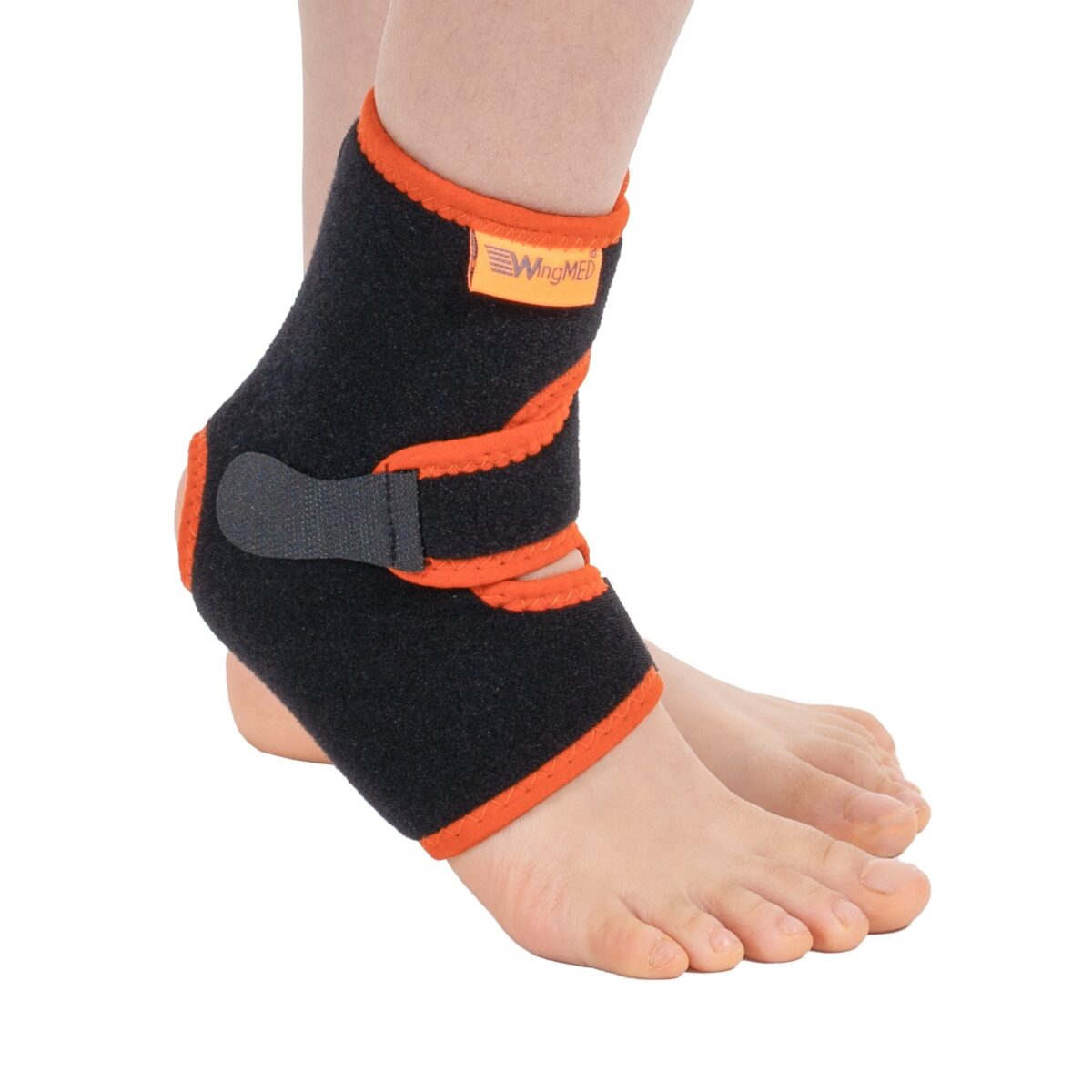
If you are comparing an ankle brace, ankle support, or walking boot in South Africa, the most important question is not which product looks strongest. The right choice depends on how unstable the ankle feels, whether you are recovering from a mild sprain or a more serious injury, how much movement your doctor wants to limit, and what you need to do each day. SINEM Afrique Medical helps buyers, clinics, sports programs, and caregivers compare support levels clearly so they can request the right brace and the right size before buying.
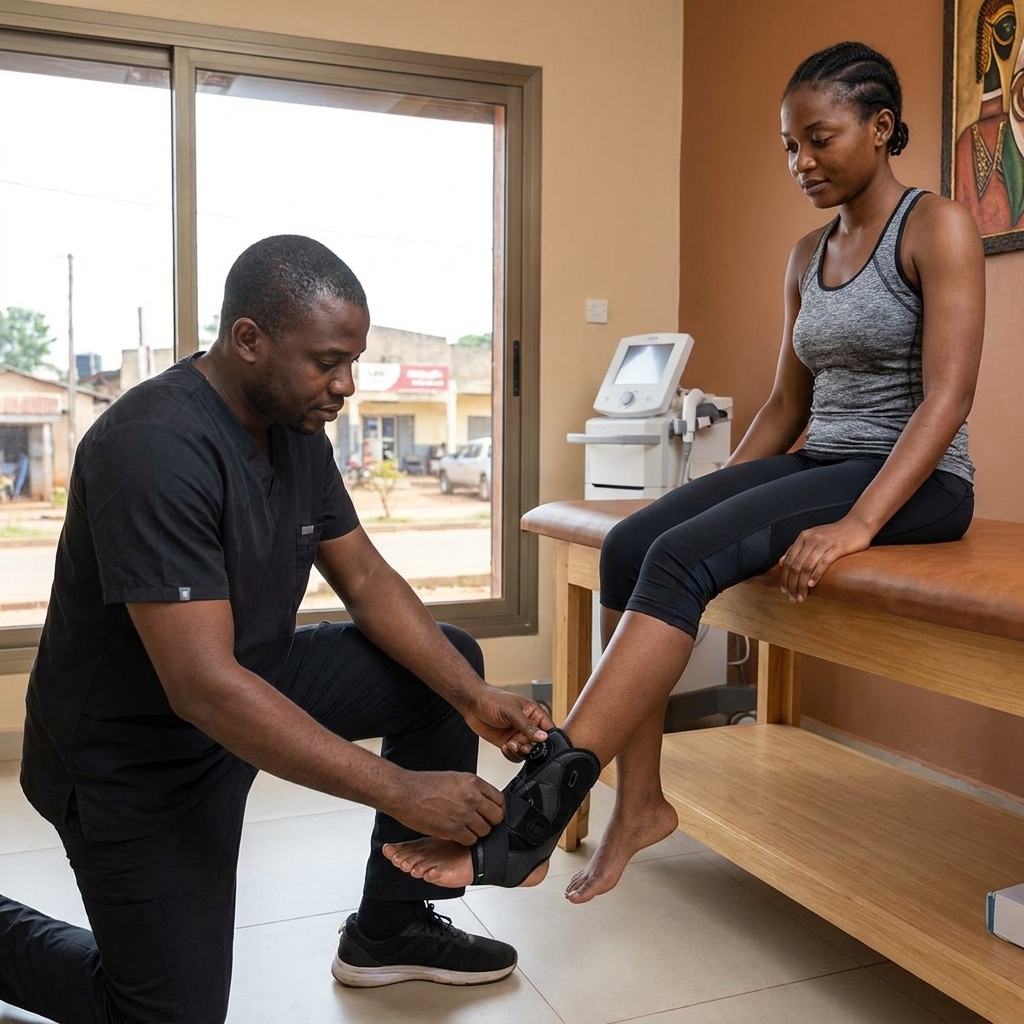
Direct answer: which ankle support level makes sense?
As a simple buying guide, elastic ankle support is usually the lightest option, lace-up ankle brace offers firmer everyday support, hinged ankle brace is stronger when side-to-side control matters, and a walking boot is generally for higher protection when a clinician wants ankle motion limited more seriously. An ankle brace should never replace medical evaluation after a major fall, a visible deformity, severe swelling, or an inability to bear weight. If the injury is significant, ask your doctor or physiotherapist what category of brace is appropriate before ordering.
Ankle brace comparison table
| Option | Support level | Best fit for | Main trade-off |
|---|---|---|---|
| Elastic ankle support | Light | Mild swelling, light compression, early return to daily activity | Comfortable, but not enough for serious instability |
| Lace-up ankle brace | Moderate | Sport, repeated sprains, daily support with more structure | Better control, but can feel warmer and more restrictive |
| Hinged ankle brace | Moderate to strong | Ligament instability, side-to-side protection, supervised return to play | Bulkier and usually needs more careful sizing |
| Walking boot | Strong | More serious sprain, post-injury protection, staged recovery under clinician advice | Highest restriction and not ideal for casual self-selection |
How to think about support levels before you buy
Many buyers search for the “best ankle brace” when what they really need is the right amount of support. Too little support may leave the ankle feeling loose or painful. Too much support may be uncomfortable, awkward for work, or inappropriate if a clinician wants controlled movement instead of full restriction.
Elastic ankle support is mostly about compression and comfort. It can make sense for mild swelling, light support during long days on your feet, or after the acute phase of a small sprain. A lace-up ankle brace is often chosen when buyers want a stronger feeling of hold for walking, training, or repeated ankle turning. Hinged ankle brace options are more relevant when lateral control matters and the ankle needs extra protection during recovery or monitored return to sport. A walking boot sits in a different category because it is meant for stronger immobilization and is usually selected with clinical guidance, especially after a more serious ankle injury.
Common buying mistakes to avoid
- Buying by appearance only: A larger or harder brace is not automatically safer. Match the brace to the actual support goal.
- Self-selecting after a serious injury: If you cannot bear weight, if swelling is severe, or if the ankle looks deformed, get medical assessment before buying any brace.
- Ignoring footwear: Some braces fit easily inside a trainer or work shoe, while a walking boot changes shoe planning completely.
- Skipping measurements: “Medium” is not consistent across product families. Always request the sizing method for that exact brace.
- Using sport language for every case: A football player, warehouse worker, caregiver, and clinic buyer may all need different support levels even if they all search “ankle support”.
- Choosing a walking boot for convenience: Walking boots are useful when indicated, but they are not the default answer for every ankle problem.
Sizing and measurement guide
Before requesting a quote from SINEM, ask which measurements are needed for the exact product family. For most ankle brace and ankle support products, buyers should be ready to provide ankle circumference at the narrowest point above the ankle bone, foot size, shoe size, whether the brace is for the left or right side, and whether the product will be worn inside everyday footwear. For stronger braces and walking boots, calf measurement and height notes may also help.
- Measure at the end of the day only if swelling is stable. If swelling changes sharply through the day, mention that to the supplier.
- Use a soft tape measure and record the number clearly in centimeters.
- State whether the injury is recent, recurrent, post-surgical, or mainly for sport protection.
- Tell SINEM if the buyer is an adult, teenager, or clinic purchasing for mixed patient sizes.
- Ask whether the brace is low-profile enough for school shoes, work boots, or training shoes.
This matters in South Africa because many buyers need support that works with long commutes, standing work, school sport, and daily walking. A brace that feels fine on a couch may be the wrong fit for a retail shift, warehouse floor, or football training session.
Local buying notes for South Africa
South African buyers often compare ankle support products for school sport, club football, running, netball, gym training, physically demanding work, and post-clinic recovery. The practical questions are usually about support strength, sizing, delivery, and whether the brace fits daily footwear. When ordering for Johannesburg, Cape Town, Durban, Pretoria, or another major city, include your delivery city and urgency so quote guidance can reflect transport planning. For clinic, physio, pharmacy, or team orders, mention quantities and whether you need a mix of elastic support, lace-up models, hinged braces, or walking boots.
SINEM-specific buying value is not only the brace itself. The useful part is getting matched to the right category quickly. If you already have a prescription, physio note, or rehab plan, send it with your inquiry. If you do not, send a clear description of the use case such as “ankle rolls repeatedly during football”, “needs support for standing work after a sprain”, or “doctor requested a walking boot after injury review”. That reduces back-and-forth and helps the team narrow the right support level faster.
Which option suits common real-life cases?
Mild twist or swelling after activity
An elastic ankle support may be enough when the goal is gentle compression and comfort, especially once serious injury has been ruled out. It is not the best choice if the ankle keeps giving way.
Repeated sprains or return to sport
A lace-up ankle brace is often a more practical step up because it gives firmer hold while staying more wearable in a shoe than bulkier options. It is common for buyers who want more confidence during sport or active work.
Instability that needs stronger side control
Hinged ankle brace models make more sense when lateral stability is the main issue and the buyer needs stronger control under clinician guidance.
Higher protection after a bigger injury
A walking boot is usually the category to discuss when a clinician wants stronger immobilization and staged progression. This is not the best category to guess on your own.
Useful internal links and product paths
Frequently asked questions
Do I need an ankle brace or a walking boot?
If the injury is serious, painful to bear weight on, or recently assessed by a clinician, ask whether a walking boot is required. A walking boot usually means the protection level needs to be stronger than a standard ankle brace.
Can I use an ankle support for sport?
Yes, but the product type matters. Light elastic support feels different from lace-up or hinged protection. Ask for the intended use when ordering.
Will the brace fit inside my shoe?
Some will and some will not. Mention school shoes, safety boots, trainers, or football footwear when asking for advice so the team can guide you to a realistic option.
What should I send to get the right recommendation?
Send your ankle measurement, shoe size, left or right side, city, use case, and any prescription or physio note you already have.
Can clinics and teams request mixed ankle products?
Yes. If you need multiple support levels for a clinic, sports team, or pharmacy, ask for a mixed quote and specify likely sizes and product categories.
Quote and support CTA
Need help choosing between elastic, lace-up, hinged, and walking boot options? Request a quote from SINEM Afrique Medical with your measurements, city, and use case. The team can guide you toward the right ankle brace or ankle support category and help you avoid overbuying or under-supporting the injury.
Medical note: This guide is for product-selection support only. It does not replace diagnosis, treatment, or rehabilitation advice from a qualified clinician.